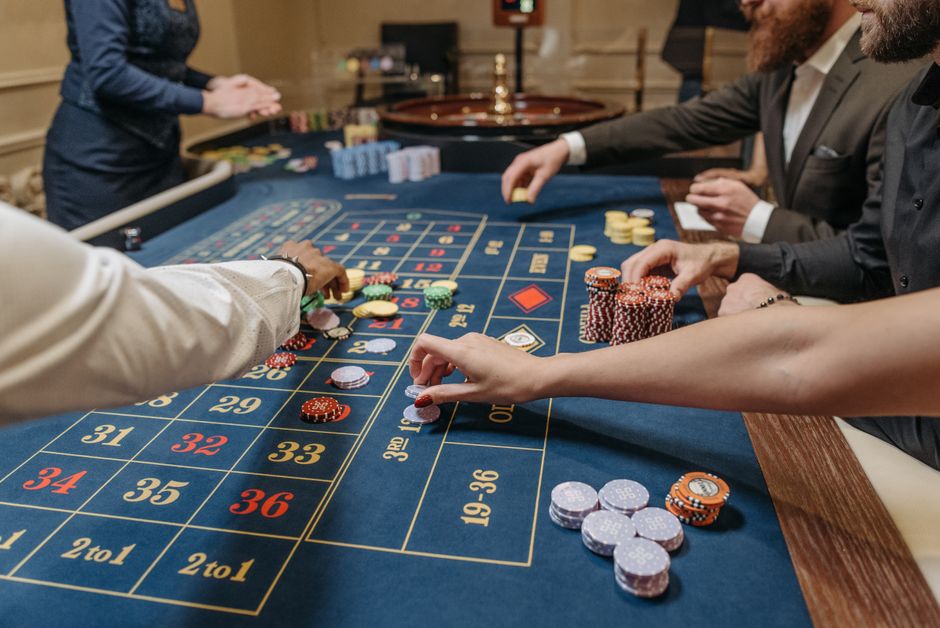
Let's be honest: the days of strolling into a smoky Vegas card room and reading opponents by the twitch of an eyebrow are largely over—at least for those of us who prefer a keyboard to a felt table. iGaming has exploded into a $100 billion global beast, and with that growth comes a flood of options, gimmicks, and genuine opportunities. Whether you're spinning slots at 2 a.m. or grinding micro-stakes poker tournaments on your lunch break, the landscape has shifted. This isn't a beginner's primer on how to click 'spin.' It's a field guide for the player who wants to treat iGaming like a hobby with an edge, not a lottery ticket.
The Slot Machine Reimagined: Volatility Is Your Friend
If you still think slots are mindless button-mashing, you haven't looked at a modern video slot. Today's titles from studios like Nolimit City, Push Gaming, and Relax Gaming are essentially complex math problems dressed in neon. The single most important concept to grasp is volatility—sometimes called variance.
Low-volatility slots pay small amounts frequently. They're great for stretching a bankroll on a lazy afternoon. High-volatility slots, like San Quentin xWays or Money Train 3, can go hundreds of spins without a win, then smash you with a 5,000x payout. Most casual players gravitate toward the flashy high-volatility games without adjusting their expectations. That's a recipe for a quick bust.
Here's a concrete tip: if you have a $100 bankroll and want a session to last at least an hour, avoid anything with maximum win potential above 10,000x. Instead, look for slots with a hit frequency around 25-30% (often listed in the game's help file). My sweet spot for a balanced session is medium-high volatility, like Book of Dead or Reactoonz. These games give you enough feedback to stay engaged but still offer a shot at a meaningful multiplier.
Poker in the iGaming Era: Traffic, Tools, and Table Selection
Online poker has become a two-tier world: massive global sites with hundreds of thousands of players, and smaller, niche rooms that cater to specific formats. For a serious grinder, the biggest adjustment over the last five years has been the rise of GTO (Game Theory Optimal) solvers. You can't just play 'feel' anymore at anything above micro-stakes.
But here's the thing that separates winners from break-even players: table selection. It's boring, it's unsexy, but it matters more than your preflop range charts. On a site with 500 tables running, you can find the one with a player who is clearly on tilt, or a table full of passive callers. Use the lobby filters. Sit out after 20 minutes if the table is a rock garden. That single habit can add 2-3 bb/100 to your win rate.
- Track your hands. Use a HUD (Heads-Up Display) like PokerTracker 4 or Hand2Note. Even if you only play recreationally, knowing your opponent's VPIP (Voluntarily Put Money In Pot) and 3-bet percentage is a cheat code.
- Bankroll management: Never buy into a cash game for more than 5% of your dedicated poker bankroll. For tournaments, 2% max. This isn't conservative—it's survival.
- Exploit the bubble. In tournaments, near the money bubble, most players tighten up disastrously. That's when you attack their blinds with any two cards from late position.
Sports Betting: The Margin Is the Game
iGaming isn't just casino games and cards. Sports betting has become the primary entry point for millions, especially in newly regulated US states. But most bettors lose because they ignore the single most important number: the vig (vigorish), or juice.
When you see a moneyline of -110, that means you need to win 52.4% of the time just to break even. That's a brutal baseline. The sharpest bettors focus on two things: line shopping and closing line value (CLV). Always have accounts at three or four sportsbooks. The difference between -110 and -105 on a $500 bet is $25.
My advice for anyone new to sports betting: specialize. Don't bet on every NFL game, every NBA slate, and every UFC card. Pick one league, one market (say, player props for NBA points), and track every bet. After 100 bets, you'll know if you have an edge. If you can consistently beat the closing line by 1-2%, you're a long-term winner.
A quick note on bonuses and promos
Sportsbooks throw out 'risk-free' bets and deposit matches like confetti. Read the fine print. A 'risk-free' bet often means you get a free bet token if you lose, not cash back. And that token usually has a minimum odds requirement (e.g., -200 or longer). These are still valuable, but they're not free money—they're marketing. Take a look at xoilac for a fuller picture.
Live Dealer Games: The Hybrid Experience
If you miss the social aspect of a real casino, live dealer games are the closest thing online. Streamed from studios in Malta, Latvia, or New Jersey, these games use real cards, real wheels, and real dealers—just with digital betting interfaces.
Evolution Gaming dominates this space, and for good reason. Their Lightning Roulette and Crazy Time have become cash cows. But be warned: the house edge on live dealer blackjack is often higher than RNG (random number generator) blackjack because of the rule variations (e.g., dealer hits on soft 17, no double after split). Check the rules before you sit down. And if you're playing live roulette, remember that the single-zero European wheel (2.7% house edge) is vastly better than the American double-zero wheel (5.26%).
One more tip: live dealer games are streamed in real time. If your internet is laggy, you'll miss betting windows. Use a wired connection or 5GHz Wi-Fi. Nothing is more frustrating than timing out on a 50x payout because your signal dropped.
Responsible iGaming: Not a Slog, a Strategy
Everyone preaches 'set a limit,' but few actually do it effectively. The most practical method is session-based loss limits, not daily or weekly deposits. Before you open a single table, decide: 'I will lose no more than $50 this session.' Then stick to it. When you hit that number, log off. No 'one more spin.'
Also, use the tools the operators provide. Every regulated site has deposit limits, time-out periods (24 hours to 6 weeks), and self-exclusion. These aren't signs of weakness—they're the mark of a player who plans to be around next year. The house edge doesn't care how smart you are; it only cares that you keep playing. Your job is to make sure you play on your own terms.
Finally, chase the fun, not the loss. If you're steaming after a bad beat, close the laptop. The best iGaming session is the one where you walk away still enjoying the game.
So there you have it: respect volatility in slots, treat poker like a math problem with a social layer, shop your sports lines, and treat live dealer games as a hybrid experience with a bigger edge than you think. iGaming rewards the patient, the analytical, and the self-aware. The flashy bonuses and jackpot dreams are fine as decoration, but the real edge comes from understanding the mechanics. Now go find a table—but only if the numbers make sense.


Félix Lengyel 01.01.2024 at 8:00
You guys have put so much work, effort, and time while designing this awesome theme I can see that passion when I incorporated it into my website.
ReplyJoseph Crawford 01.01.2024 at 8:00
The only thing I LOVE more than this theme and it’s incredible options is the support team! They are freaking amazable!
ReplyPatsy Hamlin 01.01.2024 at 8:00
Outstanding quality in this theme, brilliant Effects and perfect crafted Code. We absolutely love it and can highly recommend DynamicLayers!
Reply